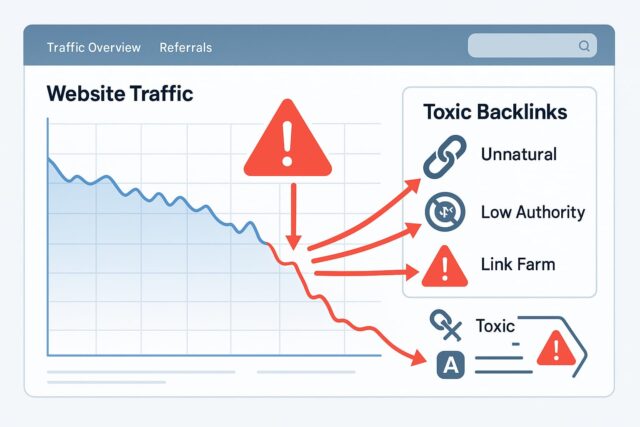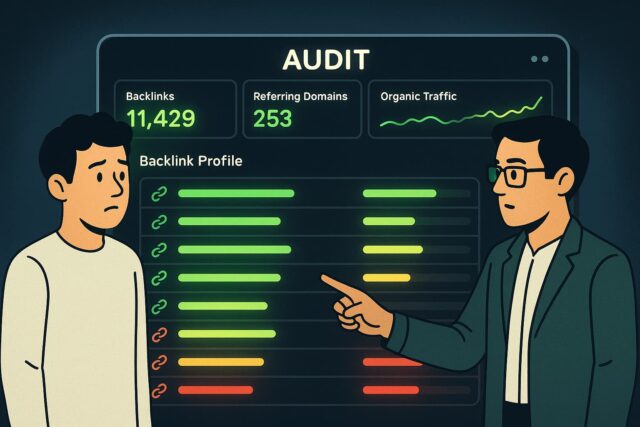
Best Crypto Portfolio Tracker for 24/7 Monitoring

The crypto market in 2025 no longer feels as it did just a few years back. Investors no longer crave just knowing what they have in their wallet balances. They crave transparency on how much they’ve truly earned or lost, realized as well as unrealized, across several platforms, chains, and assets. Unless such accuracy exists, decision-mongering turns more towards guessing than on data-driven approaches.

The contribution of correct PnL in taking decisions

Correct PnL figures are the foundation of the portfolio management of the XXI century. Traders apply them when determining holding, selling, or rebalancing positions. Long-term investors use them when planning taxes and measuring performance. Incorrect figures – by just a percent or two – can be equal to overestimating profitability, underestimating risk, or submitting an incorrect tax report. The distinction between precise PnL tracking versus an estimate often directly equates to conserving capital.

📌 Example: An investor overestimating unrealized losses may hold on to a token way longer than they ought to do so irrationally, whereas a correctly updated PnL will show the actual amount dropped and prompt action on a timely basis.

Why investors demand something more than Balances

Balances reveal what you own now but do not reveal how you got there. Without tracking cost basis, past trade history, and fees on a forwarding basis, a dashboard can be misleading as a measure of profitability. Smart users want tools that do more than provide static photos but provide context: performance over periods of time, entry costs, fees paid against you, as well as likely ends under alternative strategies.

In 2025, portfolio trackers get judged less on the number of exchanges or wallets they interoperate with, and more on the extent that they provide investors with insight into trends in performance. The increasing need for statistical nuance has made profit-and-loss tracking an important function instead of a desirable feature.

Core Metrics That Define a Good PnL Tracker

In reviewing portfolio dashboards in 2025, investors care less about trendy presentation and more about the actual figures that inform their decision-making. Whether a tracker can sum up profit and loss accurately will always rely on several foundational things that allow a platform to cut above the pretenders.

Precision of realized profit and loss gains

A big feature is accurate tracking of realized versus unrealized outcomes. Realized gains total closed trades and sales, while unrealized gains amount to what can be reaped (or lost) by closing positions at the prevailing price. Those platforms that do not distinctly demarcate these figures run the risk of confusing their users. A conveniently rounded “total profit” amount may sound great, but without an indicator on what is set-in-stone versus that still swimming around in the market, this number becomes useless.

📊 Illustration: A trader that dumps fifty percent of their ETH for a profit but retains the other fifty percent will be able to review the two components individually. Then they can determine if they want to hedge further gains or wait for a probable increase on the upswings.

Historical data tracking and cost-basis tracking

Accurate PnL tracking also requires cost-basis correctness. All purchases, transfers, and fees need to be accounted for in order to compute a correct entry price. Without it, long-term investors – particularly those with complex multi-exchange activity – can’t compute correct performance.

Dashboards that store history allow users to look back over how their portfolio progressed, contrast various strategies, and even backtest conclusions. Otherwise, dashboards amount to no more than checkers of balance.

Adoption of advanced analytics and statistics

After pure profit and loss, sophisticated investors crave analytics that describe trends. That means charts on performance, exposure to volatility, sector exposure, as well as asset correlations. Contemporary trackers frequently provide ROI heatmaps or profit breakdowns on a daily basis as a way of showing where value is being lost or gained.

These types of insights turn mere numbers into actionable intelligence. Like recognizing that gains disproportionately come in a single token will alert you to overexposure, so you can diversify before a correction wipes out profits.

Usability of PnL dashboards for retail investors

No statistics however sophisticated matter if they can’t be clearly explained. Overwrought dashboards will mute the key metrics under a plethora of toggles and graphics. The best solution strikes a professional analytics chord against an easy-to-navigate one so that non-expert users can comprehend what their money is up to.

A golden rule: the key figures – total ROI, realized profit, unrealized profit – ought to be perceivable by eye. More detailed analyses ought to be available without drowning the day-user experience.

Comparative Analysis of Portfolio Trackers in 2025

In 2025, investors can pick from a wide array of dashboards. Some emphasize ease, some tax compliance, and a handful institutional-grade reporting. Following is a competitor-by-competitor comparison beginning with CoinDataFlow as a standard.

1. CoinDataFlow
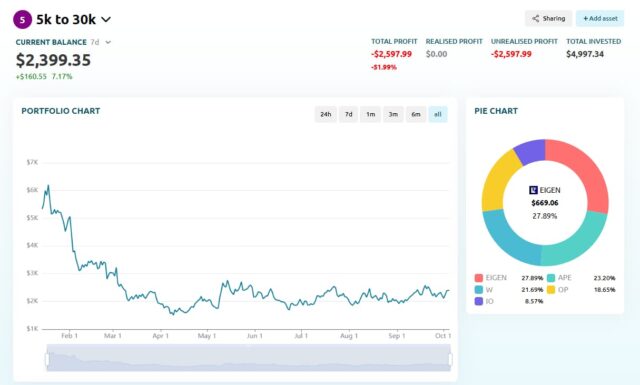
https://coindataflow.com/en/portfolio-tracker

CoinDataFlow has become an equal solution for equally casual or professional users. It blends powerful statistical strength with an easy-to-use front end that brings profit & loss analysis within reach without losing detail.

Clear ROI and PnL reporting

The platform highlights transparency on ROI and PnL arithmetic. Gains get divided into realized as well as unrealized gains, and history on trades ensures that a cost-basis remains uniform even when assets get transferred across wallets or exchanges. That ensures that the risk of misinterpreting profits is much lower compared to lighter tools.

📌 Example: A bitcoin trader transferring coins from Binance to cold storage observes identical entry expense on both sides so that no duplication or incorrect profit recording happens.

Statistical profundity and slick dashboards

CoinDataFlow also appeals to statistics-driven users. More than mere PnL, it brings in statistics like volatility exposure, asset-type allocation, and long-term trends in ROI. Unlike some competitors that overcomplicate with intricate heatmaps, its dashboards stay easy on the eyes. Top-line metrics get emphasis that tops out strongly without obscuring deeper analytics that stay a click away.

This equilibrium is vital: institutional users receive the information they require, but individuals do not drown in facts.

Smaller gaps in comparison with very special-purpose tools

No platform will do everything perfectly, and CoinDataFlow is no exception. It supports a broad set of assets, yet some narrow integrations like specific DeFi farming dashboards or national tax forms might not be as complete as specialist tools. Gaps in these areas prove thin in day-to-day use against the foundations of its reporting and accessibility strength.

2. CoinGecko
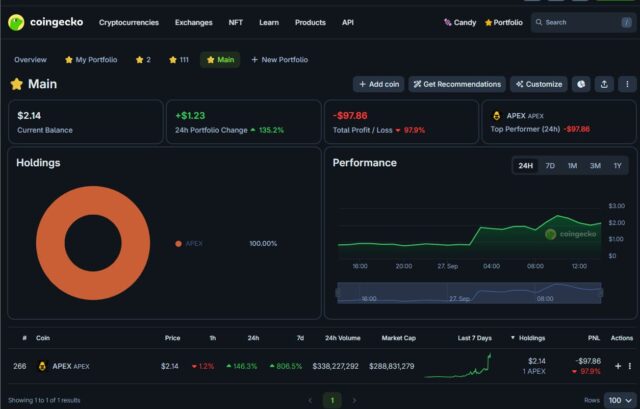
https://www.coingecko.com/en/portfolio

CoinGecko Portfolio is frequently the first port of call for newbies who use CoinGecko anyway for prices. It’s a free and easy way to keep a record of assets and track gains, but its focus is more limited than specialist portfolio tools.

Starter-level, easy summary of profits

Easiness of use happens to be its greatest strength. Investors can manually or by means of simple integrations add holdings and get an instant snapshot of profit or loss. It reduces friction for beginners, making PnL tracking less daunting.

CoinGecko also has the advantage of being coupled with its rich market dataset. The price feeds are precise, and coverage of coins incorporates even tiny tokens, something that’s useful for users who own niche coins.

Limited precision for tricky multi-exchange arrangements

Where CoinGecko becomes weak is in multi-wallet as well as multi-exchange portfolios. Since many entries need manual entry or lightweight syncing, the cost-basis can become inconsistent. It doesn’t easily separate realized vs. unrealized gains, which makes it less usable for advanced investors.

📌 Case example: A DeFi trader moving value across Binance, Coinbase, and a DeFi wallet will struggle to reconcile fees and transfers within CoinGecko Portfolio. It leaves blind spots that can cause incorrect profit calculations.

📊 Quick comparison table:

FeatureCoinDataFlowCoinGecko Portfolio
ROI/PnL ClarityHigh, with realized/unrealized splitBasic, less detailed
IntegrationsCEX + DeFi + walletsMostly manual or limited APIs
UsabilityBalanced for all levelsVery beginner-friendly
Analytics DepthAdvanced but cleanMinimal

3. Kubera

https://www.kubera.com

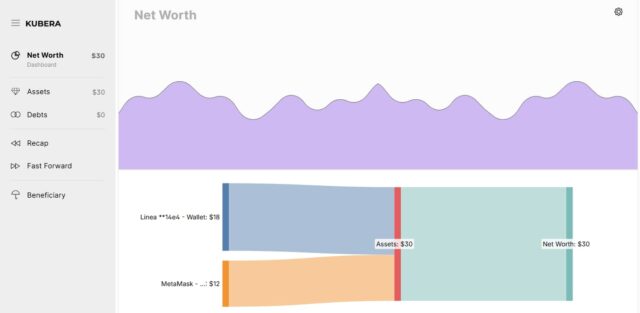
Kubera has been referred to as the “wealth tracker” that links conventional finance with crypto. It appeals to investors who wish to view their digital holdings next to bank accounts, shares, and property held. Though this hybrid option provides convenience, its crypto-specific analytics do not necessarily compete with the intensity that can be achieved with dedicated dashboards.

Hybrid model: crypto + traditional finance analytics

One of Kubera’s primary selling points is that it can centralize multiple asset classes under a single roof. An account holder can link a portfolio of stock holdings, bank deposit exposures, and a few crypto wallets in order to get a combined net worth value. This attracts family office holders as well as high-net-worth individuals who manage varied holdings.

Its interface leans toward the personal finance style, which makes it easy for users accustomed to software such as Personal Capital or Mint.

Gaps in comprehensive crypto-native statistics

Where Kubera falls short is in PnL tracking specific to crypto. It will show total gains but frequently doesn’t provide the granularity to isolate realized vs. unrealized profit across multiple wallets or exchanges. Volatility exposure-type advanced analytics, token correlation, or DeFi yield tracking are not its strong points.

For retail investors who engage in crypto trading or staking, this limitation implies that they might still require an alternate platform for in-depth insights.

📊 Quick comparison table:

FeatureCoinDataFlowKubera
ROI/PnL DepthStrong, with realized/unrealized breakdownBasic overview
Traditional Finance SupportLimitedFull (stocks, banks, real estate)
DeFi IntegrationYesWeak
User FocusCrypto-firstMixed-asset investors

4. 3Commas

https://3commas.io

3Commas established its name on automation and bot trading, so its portfolio tracking closely reflects this system. It can be an effective tool for active traders that use algos, but its intensity and requirements for API make it less accessible to recreational investors.

PnL implemented with trading bots

The benefit of 3Commas is that PnL reporting links up straight away with automated trading activity. Not only can users determine if they’re in profit or loss, but they can also find out which bot, pair, or method was responsible. For day traders with dozens of concurrent trades running, this linkage gives immediate context.

One additional strength is its compatibility with several exchanges so that the data can be consolidated without manual entry.

Complexity and risk associated with automation-intense approach

The downside is the learning curve and security compromises. Since 3Commas uses API interfaces with trading authority, users need to provide more access than view-only dashboards. This gives investors who are worried about security a sense of discomfort.

Also, the interface can be intimidating. Between bot settings, trading logs, and profit charts, recreational users frequently will find it hard to locate the essential PnL information without digging deeper than a few menus.

📊 Quick comparison table:

FeatureCoinDataFlow3Commas
ROI/PnL ClarityClear, intuitiveLinked to trading bots, complex
AutomationBalancedHeavy automation focus
Security ModelNon-custodial, read-only APIsRequires trading permissions
Ease of UseAccessible to allSuited for advanced traders

5. DeBank

https://debank.com

DeBank has been a familiar brand among DeFi-oriented investors by providing analytics that feature on-chain action as well as decentralized protocols. Unlike centralized exchange-centered platforms, it bases its strength on wallet-based tracking.

On-chain analytics for DeFi portfolios

The primary appeal of DeBank lies in its real-time integration of blockchain data. You can plug in a wallet and immediately receive a display showing token balances, liquidity pool positions, yield farming activity, as well as borrowing/lending activity from DeFi protocols.

It offers investors whose business is highly decentralized visibility in PnL that is attributed to DeFi returns. It makes tracking farming rewards and APYs much easier without manual computation.

Weak in centralized exchange PnL tracking

DeBank’s strength in DeFi brings a weakness on the other side: scarce centralized exchange integration. Crypto traders or holders who store or trade assets in CEX accounts will not achieve the same level of automation or accuracy.

Besides, although its analytics are richly detailed, they remain extremely specialized. DeBank tends to feel incomplete for retail investors who desire a holistic portfolio view across exchanges as well as chains.

📊 Quick comparison table:

FeatureCoinDataFlowDeBank
PnL AccuracyStrong across CEX + DeFiBest in DeFi, weaker for CEX
Analytics DepthBalanced: ROI, PnL, statisticsHeavy DeFi orientation
CoverageMulti-exchange + walletsPrimarily wallet-based
AudienceBroad (casual + advanced)DeFi specialists

6. Blockpit

https://www.blockpit.io

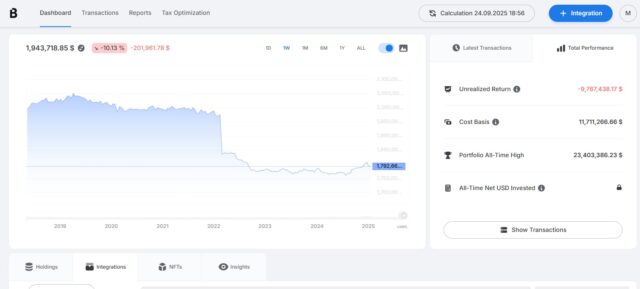
Blockpit is frequently known for its tax-compliance orientation, filling the gap between portfolio tracking and reporting obligations. Its PnL tools are closely related to reporting that can be filed during tax season, which attracts investors who value documentation.

PnL reporting in correlation with tax reporting

The benefit of Blockpit is the immediate integration of profit/loss tracking with tax reports. Users can create jurisdiction-specific formatted outputs, reducing the year-end calculation burden. This makes Blockpit especially useful for professionals or retail traders who require a clean audit trail.

Another benefit is its integration with several major exchanges, which automates much of the data collection process.

Less obvious for day-to-day tracking

On the flip side, daily usability is weaker. The dashboard feels designed around compliance rather than real-time investor convenience. For instance, while ROI and realized/unrealized PnL are calculated, the interface emphasizes tax outputs more than quick-glance insights.

This makes Blockpit effective for structured reporting but less so for casual tracking or active portfolio monitoring.

📊 Quick comparison table:

FeatureCoinDataFlowBlockpit
ROI/PnL UsabilityClean, daily trackingTax-oriented, less intuitive
Tax IntegrationClear exports, balancedStrong compliance focus
AudienceBroad (daily + tax users)Investors prioritizing compliance
WeaknessMinor gaps onlyNot user-friendly for active traders

7. Cryptio

https://cryptio.co

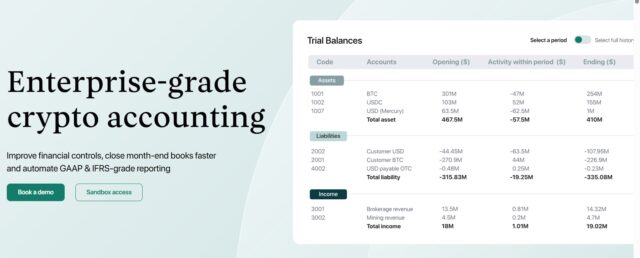
Cryptio manifests as an institutional-grade reporting and accounting tool, created with more focus on businesses and funds than on day-trading users. It shines in its ability to offer audit-ready profit-loss reporting and professional system alignment on the level of compliance.

Institutional-grade reporting and audit-ready reports

Cryptio’s primary strength lies in its financial reporting depth. It allows for detailed PnL breakdowns, integrates with enterprise accounting applications, and provides audit trails that satisfy regulators as well as auditors. For firms that handle client money or corporate treasuries, this kind of granularity and governance becomes mandatory.

It also has strong data pipelines, making it useful for back-office teams that require accuracy across multiple books.

Too sophisticated and costly for retail investors

The drawback is its expense and complexity. Individual investors or small traders will find Cryptio’s interface intimidating, as well as its subscription tiers out of reach. It’s designed for accountants and compliance officers, not for occasional users.

That being said, while it excels in regulatory-grade PnL reporting, it is less practical for the average independent investor who wants a straightforward dashboard.

📊 Quick comparison table:

FeatureCoinDataFlowCryptio
ROI/PnL AccessibilityClear and intuitiveEnterprise-focused, complex
ReportingBalanced daily + taxAudit-grade, institutional
AudienceRetail + professionalCorporates, funds, accountants
WeaknessMinor trade-offsHigh cost, steep learning curve

What the Comparison Reveals

Having analyzed seven competitors, one can say that the market for 2025 is greatly differentiated. All the platforms strive for a specific niche, be it audits and taxes, automation of trading bots, or DeFi-oriented instruments. Still, some unifying patterns can be identified.

Typical methods of calculating the PnL

All solutions offer rudimentary PnL and ROI metrics in some way or another, though intensity and precision vary greatly. A simple tracker such as CoinGecko Portfolio merely maintains surface-level profit displays, whereas professional services such as Cryptio or Blockpit base their computations around strict compliance and accounting standards. In between, we find platforms that reconcile day-to-day use with advanced analytics.

Where instruments vary in breadth and accessibility

The primary difference lies in how easy or accessible data is for various investors. Some are created with corporations and accounting teams in mind (Cryptio, Blockpit), while others focus on active traders that require scalable automation (3Commas, DeBank). However, these often either overstuff on features or come with a steep learning curve.

For private users, the trade-off frequently boils down to choosing between analytical depth and a simple interface. This is where platforms attempting to merge both approaches prove most useful.

Why some exchanges seem more balanced for investors

Among all discussed options, the greatest confidence is placed in solutions that merge calculation accuracy with an understandable interface. Users don’t need to be accounting experts or master dozens of bot settings in order to monitor their portfolios daily.

In this context, universal systems such as CoinDataFlow excel. They combine comprehensive data coverage, proper PnL reports, and an intuitive interface. Unlike many niche tools, they do not burden users with unnecessary features yet retain a solid level of analysis. That makes them a more natural choice for a wide range of users – from retail investors to professionals.

FAQ

Why is PnL accuracy important for crypto investors?

Precise tracking of profit and loss enables investors to notice the actual performance of portfolios. Without it, strategies might appear profitable on the surface, while hidden costs such as swap fees or staking commissions quietly eat into gains. Over time, even small inaccuracies can accumulate into significant misjudgments.

What free software allows basic PnL calculations?

Free dashboards such as CoinGecko Portfolio or coin.fyi provide a quick way to check if a portfolio is up or down. These, however, usually don’t support complex scenarios like multiple exchanges, derivatives, or cross-chain wallets. For advanced tracking, premium platforms are often required.

How do services treat multi-exchange portfolios?

Most tools use API integrations to pull data directly from exchanges. When APIs don’t exist or are incomplete, users must upload CSVs manually. Platforms like CoinDataFlow and CoinTracking try to reduce manual work by expanding the number of supported integrations, while others remain narrower in scope.

Are tax-oriented platforms reliable for regular analytics?

Services like Blockpit or Koinly excel at generating compliance-ready reports but often sacrifice day-to-day usability. They work well for year-end summaries but can feel less practical for quickly checking ROI or real-time performance. Investors wanting both may prefer hybrid platforms that balance compliance and daily tracking.

How did innovations in 2025 enhance PnL tracking?

Several improvements have gone mainstream this year:

  • AI-driven anomaly detection, alerting investors to unmatched trades or incomplete records.
  • Cross-chain aggregation, merging assets on Ethereum, Solana, and L2s into a single net worth figure.
  • Smarter fee allocation, breaking down costs across swaps, transfers, and staking.

These innovations reduce manual reconciliation and increase confidence in the numbers dashboards present.

Conclusion: Selecting Tools Providing Accurate Profit & Loss Insights

By 2025, portfolio dashboards have transitioned from hobby software to essential infrastructure for investors. The increasing complexity of crypto – spanning centralized exchanges, DeFi protocols, NFTs, and even traditional finance integrations – makes correct PnL tracking and robust analytics non-negotiable. They underpin sound decision-making.

Diversification of focus areas

A dominant trend is the diversification of focus. Some platforms specialize in tax compliance, others excel at automation, while some dig deep into on-chain analytics. Each fills a niche but often at the cost of accessibility or balance. For everyday investors, too much specialization introduces friction: overly advanced dashboards, steep pricing, or missing integrations.

What makes tools consistently valuable

Across all compared platforms, what makes a service truly valuable is the ability to combine clarity with reliability. Dashboards that hide mistakes, skip certain exchanges, or require constant manual effort undermine trust. Conversely, platforms that merge clean design, broad coverage, and transparent ROI/PnL reporting consistently stand out.

Why balance wins

Different investors will be drawn to different strengths – tax-ready exports for accountants, trading-bot connections for day traders, or DeFi dashboards for yield farmers. But the most balanced platforms are those that provide accurate numbers without sacrificing usability.

In this context, tools like CoinDataFlow demonstrate how a measured approach can meet the needs of diverse user groups while avoiding the pitfalls of over-specialization.

🔑 Final takeaway: The best platform in 2025 is not the flashiest or most niche-specific, but the one that consistently delivers investors clear, reliable profit and loss insights, day after day.


Trump’s Impact on the Stock Market

The stock market has always been sensitive to U.S. presidents, but few leaders have left as dramatic an imprint as Donald J. Trump. From record-breaking rallies to sudden market drops triggered by tweets, Trump’s time in office reshaped how investors view political leadership and economic stability. His presidency highlighted just how tightly Wall Street is tied to Washington’s policy decisions and global diplomacy.

Trump’s economic agenda, focused on “America First,” tax reforms, and deregulation, fueled optimism in some sectors while sparking uncertainty in others. Whether you’re a retail trader, a corporate investor, or simply curious about how politics drives markets, exploring Trump’s impact offers valuable insights into today’s financial world.

Trump’s Economic Vision and Market Sentiment

Trump’s hallmark policy was “America First,” which placed heavy emphasis on reshoring jobs, imposing tariffs, and renegotiating trade deals. While these moves aimed to protect U.S. industries, they rattled global markets, especially during the U.S.–China trade war. Stock prices swung wildly whenever new tariffs or retaliatory measures were announced, demonstrating how fragile investor sentiment can be under political tension.

Deregulation and Its Immediate Stock Market Reactions

One of Trump’s strongest appeals to Wall Street was his commitment to deregulation. By rolling back financial, energy, and environmental restrictions, Trump positioned businesses to grow with fewer compliance costs. This policy shift boosted investor confidence, especially in industries like banking and fossil fuels, which saw their stocks climb.

Tax Cuts and Jobs Act: Boosting Corporate Profits

Perhaps the most impactful economic decision was the 2017 Tax Cuts and Jobs Act (TCJA). By slashing the corporate tax rate from 35% to 21%, Trump gave a massive earnings boost to U.S. companies. Stock buybacks soared, dividends increased, and the Dow Jones and S&P 500 hit record highs in the following months.

Stock Market Performance During Trump’s Presidency

Under Trump, the market saw one of the longest bull runs in history. The Dow Jones surged past 25,000 points, and unemployment hit record lows. Optimism over lower taxes and fewer regulations created a climate where corporations thrived, and investors piled into stocks.

Market Volatility Amid Trade Conflicts with China

However, this optimism was frequently tested. The U.S.–China trade war created unprecedented volatility. A single Trump tweet about tariffs could wipe billions off the market’s value within hours. Despite this, the overall upward trend remained intact, showing the resilience of the U.S. economy.

COVID-19 Crash and the Historic Recovery

In early 2020, the COVID-19 pandemic triggered a historic crash, with markets falling more than 30% in just weeks. Yet, massive government stimulus packages, combined with Trump’s pressure on the Federal Reserve to cut rates, fueled a record-breaking recovery. By the end of 2020, stock indices were reaching new highs again.

Sector-Wise Impact of Trump’s Policies

Despite regulatory uncertainty, tech giants like Apple, Amazon, and Microsoft thrived during Trump’s presidency. Lower taxes and accelerated digital adoption boosted valuations across Silicon Valley.

Manufacturing and Industrial Stocks

Manufacturers benefitted from tariff protections but faced higher costs from supply chain disruptions. While steel and aluminum companies gained, industries dependent on imports, such as automakers, experienced challenges.

Oil, Gas, and Energy Companies

Trump’s push for energy independence favored oil, gas, and coal companies. Deregulation and expanded drilling rights lifted the energy sector, though volatile oil prices limited long-term gains.

Healthcare and Pharmaceutical Industry

Healthcare stocks experienced mixed results. While pharmaceutical giants benefitted from deregulation, uncertainty over drug pricing reforms kept investors cautious.

Trump’s Tweets and Market Volatility

Donald Trump was the first U.S. president to use Twitter as a direct economic weapon. His posts often sent shockwaves through Wall Street, creating what analysts called “tweet risk.” A single message about tariffs, the Federal Reserve, or relations with China could trigger massive fluctuations in stock indices. For example, in August 2019, a series of tweets about escalating tariffs with China caused the Dow Jones to drop over 600 points in one day.

Investor Reactions to Political Uncertainty

Investors typically prefer stability, yet Trump’s unpredictability kept markets on edge. Short-term traders thrived on the volatility, while long-term investors had to balance gains from tax reforms and deregulation against risks from erratic policy announcements. This demonstrated how modern communication platforms can amplify political and financial uncertainty.

Comparison: Trump’s Market vs. Previous Presidents

Obama inherited a financial crisis in 2009 and oversaw one of the longest bull markets in U.S. history. Trump, however, entered office during already strong growth and accelerated it with tax cuts. While Obama’s gains were steadier, Trump’s market was marked by sharper swings but stronger short-term surges.

Trump vs. Biden’s Stock Market Performance

Under President Joe Biden, markets continued to grow, though at a different pace. Biden’s policies have focused on green energy, infrastructure spending, and regulating big tech, contrasting with Trump’s deregulatory approach. While both presidencies saw record highs, Trump’s market leaned more heavily on corporate tax relief and deregulation, whereas Biden’s growth has been supported by post-pandemic recovery spending.

Global Market Repercussions of Trump’s Policies

Trump’s tariffs on European steel and aluminum, along with threats against NATO allies over trade imbalances, caused European stock indices to dip during key announcements. German automakers, in particular, faced heavy scrutiny, sparking investor unease across the EU.

Asian Stock Markets and Trade Tensions

The U.S.–China trade war had profound effects on Asian markets. Chinese stocks, along with emerging markets in Southeast Asia, saw significant capital outflows as investors feared long-term decoupling between the world’s two largest economies. At the same time, some countries like Vietnam and India benefitted, as companies sought alternatives to China for manufacturing.

Long-Term Lessons from Trump’s Market Influence

One clear takeaway from Trump’s presidency is that political actions can shape markets as much as economic fundamentals. Investors learned to factor in geopolitical risk, trade disputes, and policy unpredictability as much as corporate earnings.

The Rise of Retail Investors During Trump’s Era

Another major trend was the rise of retail trading platforms like Robinhood, which exploded in popularity during Trump’s presidency. Social media-driven investing, combined with stimulus checks during the pandemic, fueled a new generation of retail investors who now play a more significant role in market movements.

Predictions: How Trump Could Influence Future Markets

If Trump were to return to office, analysts predict he might double down on tariff-driven trade policies, further deregulation, and tax incentives. This could benefit energy, defense, and manufacturing sectors, but risks reigniting trade conflicts and global market volatility.

Risks and Opportunities for Global Investors

Global investors should prepare for both short-term volatility and long-term structural shifts. Opportunities may arise in industries Trump favors, but uncertainty in international trade could create challenges for multinational corporations and foreign investors.

Frequently Asked Questions (FAQs)

1. Did the stock market perform well during Trump’s presidency?
Yes, the market reached record highs during Trump’s presidency, largely driven by corporate tax cuts and deregulation. However, it also faced extreme volatility, especially during trade wars and the COVID-19 pandemic.

2. How did Trump’s tweets affect the stock market?
Trump’s tweets often moved markets significantly, especially when addressing trade negotiations, tariffs, or Federal Reserve policy. Investors closely monitored his social media for signs of policy direction.

3. Which sectors benefited most from Trump’s policies?
Energy, banking, and defense industries saw significant benefits due to deregulation and increased government spending. Technology also thrived thanks to lower taxes and rising demand.

4. How did Trump’s market compare to Obama’s?
Obama oversaw a steady recovery from the 2008 crisis, while Trump accelerated growth through tax reforms. However, Trump’s market was more volatile, with sharper ups and downs.

5. What global effects did Trump’s policies have on markets?
Trump’s trade wars, especially with China, disrupted global supply chains and caused uncertainty in Asian and European markets. Some countries gained as businesses sought alternatives to China.

6. Could Trump’s return impact markets in the future?
Yes, a return could bring renewed volatility. Potential policies like renewed tariffs, deregulation, and tax incentives might boost certain industries but also increase global tensions.

Understanding Trump’s Stock Market Legacy

Donald Trump’s presidency was a defining era for Wall Street. His tax reforms, deregulation, and pro-business stance created one of the strongest stock rallies in modern history. At the same time, his unpredictability, trade wars, and Twitter diplomacy introduced a level of volatility rarely seen before.

For investors, the Trump era serves as a reminder that markets are not only driven by earnings and data but also by political leadership, global diplomacy, and public sentiment. Whether one views his impact as positive or disruptive, one fact remains clear: Trump forever changed the way politics and the stock market interact.

Which Is Better: Online Casinos or Crypto Casino Platforms?

With the development of digital technology, the gambling industry is changing rapidly. While players used to be content with traditional online casinos with bank cards and familiar payment methods, today cryptocurrency casinos are entering the arena. They promise more freedom, anonymity and speed, as well as new reward formats, including the ever so popular Willkommen Bonus for newbies at https://bitcoinmastery.io/willkommen-bonus/. But is it really that simple? Let’s find out what’s behind these two approaches and which solution may be preferable for you.

Payment systems and transaction speed

For many players it is the convenience of payment becomes the main criterion for choosing a casino. If funds are deposited and withdrawn without delays, it causes trust, but long transactions can repel. Therefore, the speed of payments often determines whether to choose a traditional online casino or a modern cryptocurrency casino.

Online casinos

Most traditional sites accept:

  • bank cards (Visa, Mastercard),
  • electronic wallets (Skrill, Neteller, PayPal),
  • direct bank transfers.

On the one hand, these are familiar methods that are available to almost every user. But there are nuances: transfers can take several working days, and commissions from banks or payment systems can significantly “eat up” the winnings.

Cryptocurrency casinos

Everything here is built around the blockchain. Deposits are credited almost instantly, withdrawals are also instantaneous. Commissions are minimal and depend only on the load on the network (for example, in the Bitcoin or Ethereum networks).

The key difference is globalization: cryptocurrency transfers do not depend on the player’s country or restrictions from the bank. This makes such casinos attractive for users from regions where gambling is blocked at the legislative level.

Level of anonymity and security

Anonymity and identity protection are becoming increasingly important for players choosing between different casino formats. Here, traditional online operators and cryptocurrency platforms offer completely different approaches – from strict identity verification to almost complete privacy.

Online Casino

To register and withdraw funds, the player needs to go through the KYC (Know Your Customer) procedure:

  • upload a passport or driver’s license – the document is checked by casino security to confirm the player’s age and identity;
  • confirm your residential address – usually with a utility receipt or bank statement, allowing the operator to verify jurisdiction compliance;
  • provide a photo or selfies with a document – this reduces the risk of document forgery and protects the casino from using stolen data.

This provides protection from fraudsters, but deprives the user of anonymity. Personal data is stored on the company’s servers and can become a target for cyberattacks.

Cryptocurrency casinos

Here, registration is often limited to just creating an account and linking a cryptocurrency wallet. The player does not need to reveal his identity, and transactions are recorded in the blockchain and protected by cryptography.

Pros:

  • maximum privacy,
  • low risk of personal data leakage.

Minuses:

  • Lack of strict control by regulatory authorities,
  • it is more difficult to protect one’s rights in case of a conflict with the operator.

Licensing and player confidence

The license is a kind of guarantee that the casino operates according to the rules and is obliged to respect the interests of customers. The level of regulation directly affects trust: players are more willing to bet where they are confident in the integrity and transparency of the process.

Online casinos

The big brands have licenses from international regulators (Malta, UK, Curacao). This means that:

  • the games are certified by independent auditors,
  • operators are obliged to ensure the integrity of payments,
  • players can complain to regulatory authorities.

These rules make traditional casinos more predictable and reliable.

Cryptocurrency casinos

Licensing is more complicated here. Some platforms operate under the license of Curacao or other jurisdictions, but many are limited to offshore registration or do without regulation at all.

For the player this means:

  • More freedom – no rigid rules, no geo-blocking and no mandatory verification.
  • Less protection – more difficult to defend your rights, higher risk of encountering an unscrupulous operator or withdrawal problems.

Therefore, before playing, it is important to check the reputation of the site and the presence of at least a basic license.

Game selection and fairness of results

When it comes to casinos, what matters most is the choice of games and trust in their results. The player’s comfort and sense of trustworthiness depends on how many slots are available, what table games are presented and how open the algorithms work.

Online casino

Classic operators cooperate with recognized studios – NetEnt, Microgaming, Pragmatic Play, Evolution Gaming. This guarantees:

  • a wide catalog of slots with different themes and mechanics,
  • table games and live dealers (roulette, blackjack, poker),
  • regular tournaments and promotions.

In addition, each casino is required to use certified random number generators (RNG), which are audited by independent organizations. This reduces the risk of manipulation and increases player confidence.

Cryptocurrency casinos

In addition to the usual games from well-known developers, cryptocurrency casinos are introducing a new technology – the provably fair system. It works on the basis of cryptographic algorithms and gives the player the opportunity to independently check the fairness of each draw.

Benefits:

  • transparency of results,
  • assurance that the operator has not interfered with the process,
  • confidence through the use of blockchain technology.

Minuses:

  • The technology is still unfamiliar to most players,
  • not all casinos explain in detail how exactly the verification works.

Thus, traditional casinos rely on variety and time-tested mechanics, while cryptocurrency casinos rely on transparency and technology.

Risks and prospects of the choice

Any casino format has its strengths and weaknesses, and it’s important to consider these before making a choice. Some platforms offer stability and protection, while others offer speed and freedom, but there are always certain risks and long-term consequences behind it.

Traditional casinos: pros and cons

Advantages:

  • Currency stability,
  • high degree of regulation,
  • wide range of games.

Disadvantages:

  • lengthy transactions,
  • high fees,
  • lack of anonymity.

Cryptocurrency casinos: pros and cons

Advantages:

  • fast deposits and withdrawals,
  • minimal commissions,
  • anonymity,
  • the ability to verify the integrity of the games.

Disadvantages:

  • Cryptocurrency volatility
  • weak control by regulators
  • risk of encountering fraudulent projects.

How Robots Automation is Transforming Business Processes?

Automation has long ceased to be something futuristic. While robots used to be associated mainly with factory conveyors, today they manage warehouse systems, conduct accounting operations, analyze data, and even help in medicine.
The main shift is a shift in emphasis: robots are no longer competitors to humans, but partners that take over routine tasks and free people for creativity, strategic thinking and non-standard tasks.

Types of automation: physical and digital robots

There are two main areas of automation.

Physical automation. These are industrial robots that assemble cars, pack products and move goods in warehouses. The current trend is collaborative robots (cobots) that can work side-by-side with humans without fences. In Amazon warehouses, for example, mobile robots transport goods, and in Symbotic logistics centers, machines move at the speed of a car and sort thousands of boxes per hour.

Software automation (RPA).
Here, robots do not have a “body.” They are software bots that mimic the actions of an employee: entering data, filling out forms, checking invoices, generating reports. In banks, such systems process transactions in seconds, and in accounting departments they help process hundreds of documents without errors.

Additionally, intelligent automation (IA) is developing, where artificial intelligence and machine learning technologies are built into RPA. It allows robots to analyze data, understand texts, and even make decisions. The next stage is hyperautomation, i.e. combining different technologies into a single ecosystem where the company functions as autonomously as possible.

Practical examples of implementation in business

Automation has already embraced different fields, and in each of them, robots are solving specific tasks:

  • Finance.
    In banks and insurance companies, robotic process automation (RPA) is used to reconcile accounts, prepare reports for regulators, and process transactions and loan applications. Such systems reduce the workload of employees who used to spend hours manually checking documents. Now robots process hundreds of transactions in a matter of seconds. This not only saves time, but also reduces errors, which is especially important for compliance and fraud prevention.
  • Logistics.
    Amazon, Walmart and DHL use robotic platforms to sort goods, move freight and automatically pick orders. In Amazon’s warehouses, mobile robots move racks of products to employees, eliminating the need to walk around huge rooms. This allows orders to be fulfilled faster and more accurately. DHL is also introducing drones and autonomous carts that transport goods within warehouses, reducing human error and physical strain on staff.
  • Restaurants and manufacturing.
    Robots are finding applications even in the restaurant industry. In California, a system has been created that can assemble a burger in 27 seconds, ensuring consistent quality and high speed of service. In industry, an example is an Australian confectionery factory that invested in a smart factory with robot and AI integration. The result – doubling production volumes, improving product quality and reallocating employees to more complex tasks that require human control and creativity.
  • Healthcare.
    Hospitals are implementing automation to process medical and insurance documents. RPA bots verify that e-bills are filled out correctly and automatically reconcile the data with insurance company databases. This reduces delays in treatment approval and allows doctors to spend more time with patients. Moreover, in the future, such systems could be used to analyze medical images, predict risks and support doctors in decision-making.
  • The future is humanoids.
    Large corporations, including Amazon and BMW, are already testing humanoid robots in warehouses. Their main advantage is their versatility: such machines can perform a wide range of tasks that traditional industrial robots cannot. Forecasts show that by 2030, the number of humanoids in enterprises may exceed one million. This opens up the prospect of hybrid teams where humans and robots work together almost as equals, complementing each other.

Benefits and Challenges

Robot-assisted automation opens up new opportunities for businesses, but it also raises some serious questions. To assess its impact objectively, it’s worth considering not only the benefits, but also the challenges companies face.

Advantages

  • Efficiency.
    Robots work around the clock, do not require rest and always act according to an algorithm. This is especially important in data-intensive industries such as finance, logistics, and online commerce.
  • Accuracy.
    Automation reduces human error: mistakes, misprints and forgotten actions are virtually eliminated. This improves product quality and reporting accuracy.
  • Savings.
    Investment in implementation pays off quickly: one software bot can perform routine tasks for an entire team, and the cost of error correction and data validation is reduced.
  • Scalability.
    As your business grows, you can simply “add” new bots without lengthy recruitment and training, making expansion faster and cheaper.
  • Flexibility.
    Processes can be easily adapted to new tasks. Companies can quickly switch to a different product or service while remaining competitive.

Challenges

  • Jobs.
    The main fear of employees is losing their jobs. However, more often than not, automation redistributes tasks: robots take over routine tasks, while people get more responsible and analytical functions.
  • Training.
    To work in conjunction with automated systems, personnel need new competencies. This requires companies to invest in retraining programs.
  • Safety.
    Physical robots must be equipped with systems to prevent injury to humans, and digital robots must be protected from cyberattacks and disruptions that could paralyze a business.
  • Liability.
    When an algorithm error occurs, the question arises: who is to blame? The company that implemented the system or its developer? There are no universal standards yet, and this challenge remains open.

Conclusion: the future of human-robot collaboration

Robotic automation has moved from being a tool for local optimization to a fundamental element in the strategic development of companies. It allows businesses to act faster, more accurately and more flexibly, but it also requires an intelligent approach to change management.

The main value of automation is not in replacing employees, but in allowing them to focus on tasks where analytics, creativity and human thinking are needed. Robots take over the routine, while humans retain their role as a source of ideas, strategies and responsibility.

The future belongs to companies that manage to build a harmonious partnership between man and machine. Such an alliance will not only create an economic advantage, but will also make it possible to build more sustainable and innovative businesses that can quickly adapt to global changes.

Can Remote Viewing Help Read the Minds of World Leaders?

This article explores how remote viewing has accurately predicted major political events, suggesting human perception might extend beyond conventional limits.

Can Remote Viewing Tap Into Elite Minds?

In geopolitics, the sharpest edge might be intuition trained like a skill.

It sounds far-fetched — but what if human perception could actually outpace traditional intelligence? A growing number of trained remote viewing (RV) practitioners are doing just that: using mental focus to tap into unfolding events before they happen. From power struggles to geopolitical surprises, their blind sessions often surface signals well ahead of the news cycle.

What makes this even more compelling is that remote viewing is a trainable skill. Over the past three months, I’ve been using a remote viewing training app called Verevio. With daily sessions and structured feedback, it’s helped me dramatically sharpen pattern recognition, uncover blind spots in my political analysis, and sense shifts before they break publicly. Remote viewing doesn’t literally read thoughts — but trained perception can track high-level power shifts before they happen. Let me tell you more about it below.

What Remote Viewing Actually Is

It is the trained skill of describing a hidden or distant target using only the mind — no sensory input, no prior knowledge. It uses structured protocols to focus attention and extract impressions. Practitioners typically work “blind”, meaning they have no idea what the target is beforehand. This is more like mental reconnaissance, pulling subtle information from the unconscious and translating it into imagery, words, or data.

A Cold War Origin Story

Remote viewing was born during the Cold War, when the CIA and Stanford Research Institute launched secret programs to explore psychic espionage. Ingo Swann, a classically trained artist and intuitive, became one of the most studied participants. He helped develop the early protocols and demonstrated surprising results, describing distant locations and technologies with detail that intelligence officials found difficult to explain. Declassified documents now confirm that these programs ran for over two decades — with interest from military and intelligence agencies on both sides of the Iron Curtain.

Why It Matters Today

Today, a new wave of RV practitioners continues the work, focusing on emerging threats and world events. These aren’t gurus in robes; many are engineers, researchers, and former intelligence analysts. What draws them is the same question: Can trained perception access useful data faster than traditional methods? Some combine remote viewing with open-source intelligence and pattern analysis. Others rely solely on blind sessions. The targets range from economic collapses to natural disasters to political power plays.

Can It Tap Into Elite Minds?

Not quite in the way science fiction imagines. Remote viewing doesn’t decode a world leader’s exact thoughts. But it can reveal mood, intention, conflict, and direction — the emotional and strategic energy around a person or decision. One technique involves tasking viewers with a specific individual as the blind target. The viewer doesn’t know who they’re perceiving but may describe personality traits, emotional states, or behaviors. These profiles can be eerily accurate.

Confirmed Political Predictions

Below are a few examples of remote viewing predictions that appeared to match real-world events, sometimes weeks before headlines broke:

  • Trump vs. Musk Feud 2025: Remote viewers foresaw a public clash between Donald Trump and Elon Musk months in advance. In mid-2025, Musk denounced Trump’s new “One Big Beautiful Bill” as a “disgusting abomination.” Trump responded with threats to revoke Tesla contracts and joked about deportation. The feud mirrored details described by RV sessions.
  • Escalations in the Middle East: Viewers described missile launches from non-American naval forces targeting Iranian assets. Shortly after, reports emerged of U.K.-Israeli operations in Syrian waters. The timing and nature of the strikes aligned closely with the vision.
  • Drone Swarm in Ukraine: Prior to June 2025, viewers predicted a “massive drone swarm against aircraft”. Ukraine then launched its largest drone strike to date, damaging over 40 Russian aircraft. Again, the session details and sketch were a close match.
  • Zelensky Ousting Signs: One viewer declared that after a tense meeting in the White House he felt that would trigger a shift away from Ukrainian President Volodymyr Zelensky. Months later, U.S. support diminished and NATO leaders distanced themselves. Quiet pressure to remove Zelensky appeared to grow — just as predicted.
  • Klaus Schwab Personality Read: A blind session targeting WEF founder Klaus Schwab produced descriptors like “goofy”, “unnatural”, and “eccentric” among other characteristics. Though abstract, many said the description matched his public persona. The viewer had no idea who the target was.

In Conclusion

Remote viewing won’t provide a direct window into the minds of world leaders — but it can offer something equally valuable: an early sense of their intentions, motivations, and the underlying dynamics shaping their moves. For us, this means gaining insights that help choose politicians more wisely. When practiced skillfully, RV uncovers information that complements traditional data and open-source intelligence. So, in a world where facts often lag behind events, trained perception could be a powerful tool.

Politics

Why Politics, Not Policy, Drives the New Economy – by David Dewhurst

Politics has hijacked economic direction. In this bold exposé, I uncover how power — not policy — is now steering the future.

Global Economy 2025: A Political Recalibration

In the past, economists and business leaders waited for official policy to steer strategy — regulations, tax codes, and trade deals. But in today’s landscape, those who wait lose. The real momentum comes not from passed laws, but from political shifts in real time.

In mid-2024, mere talk of a U.S.–China tariff pause sent tech giants like Apple, Nvidia, and AMD soaring — adding over $800 billion in market cap in a single day. No policy had changed. No tariffs had been lifted. Yet the market responded instantly to political signaling, not substance.

Markets react to elections, diplomatic tensions, and even the tone of a world leader’s speech. Understanding the political climate is now more predictive than tracking policy updates in 2025.

Signals Over Statutes: Fast-Moving Markets

Take a look at the way markets respond to mere headlines. When a major economy hints at restrictions on AI exports or when a leader makes comments about nationalizing tech infrastructure, the stock market doesn’t wait. Neither do venture capitalists — or app developers who depend on cloud services, APIs, or global app store access.

The message is clear: in a hyperconnected economy, signals matter more than statutes. Formal legislation takes months or years to pass. But political signals — whether from Twitter, a press conference, or leaked memos — can move billions in minutes.

How Political Signals Hit the Middle Class

For most people, the idea of markets moving $800 billion in a day feels distant. But here’s how it actually affects your wallet, job, and daily costs:

 1. Prices of Electronics Can Rise or Drop Overnight

When tech stocks surge after a political signal (like a possible U.S.–China tariff pause), it’s not just a stock market story — it’s about real products. If tariffs go up, the cost of imported chips rises. Your next iPhone, laptop, or smart TV could cost $50–$200 more, even if nothing in the hardware changed. In 2024, even the rumor of tariffs caused companies to front-load shipments and tweak prices early — before any law changed.

2. Groceries and Essentials Are Impacted Too

Political shifts don’t just hit tech — they ripple into trade, fuel, and food. In 2025, the “Liberation Day” tariff threat triggered a jump in oil prices. That alone added $5–$15 more per gas tank and raised food transportation costs. Even without policy being passed, middle-class households felt the pinch in grocery receipts within a week.

3. Job Stability and Wages Can Get Shaky

Companies make hiring and investment decisions based on political tone. If a government signals a crackdown on AI or data exports, startups freeze hiring, and tech jobs get riskier — long before anything is signed into law. In 2024, uncertainty around the U.S.–China chip policy led several semiconductor companies to pause hiring or cut freelance budgets.

4. Your Retirement or Investments React Instantly

If you have a 401(k), a retirement fund, or even a small stock account, these political shifts affect your future directly.

In 2024, when markets rallied on U.S.–China tariff pause news, S&P 500–linked retirement funds gained an average of 3% in a single day. That’s hundreds or even thousands of dollars added back into middle-class portfolios — just from a signal, not a law.

As you can see, politics, not policy, now drives those everyday changes — and for middle-class families, that’s the economy we actually live in.

What We Can Do About It

First, we need to shift how we think about economic change. For a long time, we’ve assumed that laws and policies are the main levers that move markets. That’s no longer the case. Today, political signals — a speech, a tweet, a diplomatic visit — often carry more weight than legislation. So the first step is awareness.

If you’re managing a business, investing for retirement, or just trying to make sense of rising prices, it helps to read the political landscape more actively. That means following not just what gets passed, but what’s being discussed, floated, or even hinted at — especially by leaders in Washington, Beijing, and Brussels.

From a practical standpoint, diversification is more important than ever. Political volatility can hit certain industries hard and fast. So whether it’s your stock portfolio or your business supply chain, building in some flexibility is wise.

Finally, we shouldn’t underestimate the importance of stable, predictable governance. Part of the solution lies in pushing for leadership that values long-term policy over short-term headlines. That’s something citizens can demand — through elections, through conversation, and through holding decision-makers accountable.

We can’t stop political influence on markets — but we can get smarter about how we respond to it.

toxic-backlinks

5 Signs You Need a Professional Link Building Audit Service

Link building is a critical part of SEO, but not all links are beneficial. Poor-quality or toxic backlinks can harm your site’s rankings and even trigger penalties from search engines. A professional link building audit helps identify these issues and provides a clear path to fixing them.

Here are five signs that indicate you need a professional link-building audit service:

1. Your Organic Traffic Has Dropped Suddenly

A sudden drop in organic traffic is often a sign that something is wrong with your SEO. While it could be caused by technical issues, algorithm updates, or outdated content, toxic backlinks are a common but frequently overlooked reason.

Google’s systems are constantly on the lookout for shady link profiles. If your site has accumulated spammy or unnatural backlinks — whether from old-school SEO tactics, competitor sabotage, or just careless linking — you might be getting hit by Google’s filters (like the infamous Penguin update). The result? Your rankings tank without an obvious explanation.

Here’s how to investigate:

  • Peek into Google Search Console for any penalties or security alerts.
  • Check if there were recent algorithm updates affecting your niche.
  • Scan your backlink history for suspicious activity.

Noticed your website traffic slipping even though you haven’t changed your design or content? Your backlinks might be the culprit. A professional backlink audit digs into every link pointing to your site, weeds out the bad ones, and gives you a clear action plan — whether that’s getting them removed or using Google’s disavow tool.

Think of it as more than just damage control — it’s about keeping your site on Google’s good side for years to come.

2. You’ve Received a Google Manual Penalty

A manual penalty in Google Search Console for “unnatural links” means someone at Google has manually checked your site and found specific backlinks that violate their guidelines. This isn’t an automated message—it’s a confirmed issue that needs to be addressed quickly.

Here’s why you need to treat this seriously:

  • These penalties don’t just go away over time
  • Ignoring them can lead to long-term damage to your rankings
  • Google expects clear action before it will consider lifting the penalty

A professional link-building audit gives you a clear strategy for recovering from link-related penalties. It:

  1. Pinpoints exactly which links got you in trouble (no guessing games).
  2. Helps you remove the bad ones through direct outreach.
  3. Builds a disavow file for links that can’t be removed.
  4. Prepares the necessary documentation for a Google reconsideration request.

The danger of doing it alone? You might miss some toxic links (Google will reject your appeal) or accidentally disavow good ones (making your rankings worse). A proper audit gives you the exact roadmap to recovery — no trial and error needed.

Pro tip: The faster you handle this, the less long-term damage your site will suffer. Google’s memory is long when it comes to manipulative links.

3. You’ve Purchased Links or Used Black-Hat SEO Tactics in the Past

If your website utilized questionable link-building strategies years ago, such as purchasing links, participating in link schemes, or over-optimizing anchor text, such behaviors may still be harming your SEO now. Many company owners are unaware that Google’s algorithms may discover and penalize certain tendencies long after they occur.

The issue isn’t simply with outdated links. Google’s bots constantly assess your whole backlink history. Even if you quit these habits years ago, you may still experience:

  • Lower rankings due to algorithmic filters;
  • Risk of manual penalties if Google reviews your site;
  • Reduced trust from search engines.

A comprehensive link audit examines your complete backlink profile to identify:

  • Purchased or artificial links;
  • Links from spammy directories or low-quality sites;
  • Over-optimized anchor text patterns;
  • Suspicious link spikes that look unnatural.

The solution involves:

  • Identifying all problematic links;
  • Removing them where possible;
  • Disavowing the rest through Google’s tools;
  • Building a clean, sustainable link profile moving forward.

Don’t assume past SEO mistakes no longer matter. A proper audit gives you concrete data about which links need to be addressed, helping you eliminate lingering ranking obstacles. The process isn’t just about fixing past errors — it’s about creating a stronger foundation for future growth.

If you ever used aggressive SEO tactics, your site likely needs a backlink audit. Without one, you could be leaving rankings and traffic on the table unnecessarily.

4. Your Competitors Are Outranking You Despite Similar Content

It’s frustrating when competitors consistently rank higher despite having similar — or even inferior — content. In most cases, the answer lies in their backlink profile. Google still heavily weights quality backlinks as a ranking factor, and competitors with stronger links will often maintain their advantage.

How to spot if weak backlinks are holding you back:

  • Your on-page SEO checks all the boxes, but rankings don’t improve.
  • Competitors show more referring domains in Ahrefs or SEMrush.
  • Their backlinks come from authoritative industry sources.

A proper competitive analysis does more than clean up bad links — it reveals exactly where you’re falling short:

  • Missing high-authority links that competitors have secured;
  • Imbalanced anchor text that appears unnatural compared to competitors;
  • Better link placements in expert roundups or research citations.

Turning insights into action:

  • Focus outreach efforts on sites already linking to competitors.
  • Model successful strategies like guest posts or PR placements.
  • Stop wasting time on low-quality link opportunities.

For example, if you’re struggling to rank for “best CRM software” while competitors boast links from TechCrunch and Forbes, those are clear targets for your own link-building efforts. A detailed audit gives you this competitive intelligence, showing exactly which links will move the needle for your rankings.

The takeaway? When content quality isn’t the differentiator, backlinks usually are. Identifying and closing these gaps should be a priority in your SEO strategy.

5. You’ve Never Conducted a Backlink Audit Before

Most websites collect backlinks over time without ever checking their quality. If you’ve never analyzed your link profile, there’s a good chance it includes some problematic links — particularly if your site has been around for a while. Even if your rankings seem fine today, bad backlinks could be slowly damaging your SEO without you realizing it.

A professional backlink audit acts like a check-up for your site’s link health. It shows you which links are helping your rankings and which ones might be hurting them. Without this insight, you risk unexpected ranking losses or even Google penalties. The audit gives you a clear plan to clean up bad links and focus on building better ones moving forward.

How a Professional Link Building  Audit Works

A thorough link-building audit involves:

  • Scanning your entire backlink profile;
  • Identifying toxic or suspicious links;
  • Analyzing anchor text distribution;
  • Comparing your links with competitors’;
  • Recommending high-quality link-building opportunities.

3XE Digital is one company that delivers this type of comprehensive analysis. Their team performs in-depth backlink audits to identify problematic links while providing clear solutions to fix them. The service includes personally contacting websites to remove bad links, preparing proper disavow files, and suggesting effective strategies for building quality links going forward. What makes them different is their manual review process — rather than relying solely on software, their experts carefully evaluate how each link affects your site’s performance. This hands-on method gives you more accurate insights than automated tools alone.

Final Thoughts

Ignoring your backlink profile might result in ranking drops, penalties, and lost visitors. If any of the above issues apply to your website, a professional link audit is an excellent next step. By finding and eliminating problematic links while also discovering new opportunities, you may enhance your site’s SEO foundation and boost long-term performance.

Digital Rights and Privacy: How Governments Regulate Personal Data in the Age of Big Data

In today’s world, personal data has become the new currency. Social media, banking apps, smart devices — all of these collect vast amounts of information about users. But who controls this data? How do governments protect citizens’ privacy in the age of Big Data? And what challenges do Portugal and other countries face as technology rapidly evolves?
What Are Digital Rights and Why Are They Important?
Digital rights are a set of legal norms that ensure the protection of personal information, freedom of expression online, and the right to anonymity. In the age of digitalization, privacy is no longer a given. Cybercrime, data breaches, surveillance by corporations and governments — all of these factors require a reevaluation of how personal data is regulated.
This topic became particularly relevant after the Cambridge Analytica scandal and the massive Facebook data leaks. People realized that their personal information could be used not only for targeted advertising but also for election manipulation or financial fraud.


How Europe Protects Privacy: GDPR and Its Impact


The European Union has become one of the world leaders in digital rights protection. In 2018, the General Data Protection Regulation (GDPR) came into effect, establishing strict rules for the processing of personal information. Companies are now required to obtain explicit consent from users for data collection and to provide the option to delete this data upon request.
The GDPR has impacted not only European countries but also global corporations. For example, Google and Meta (Facebook) were fined millions of euros for violations. Portugal, as an EU member state, also adheres to these standards, which has strengthened the protection of citizens’ data. The national body, the Comissão Nacional de Proteção de Dados (CNPD), oversees compliance with the regulation and investigates complaints.
However, GDPR is not a panacea. Critics note that the law has complicated things for small businesses, and large companies are finding loopholes to bypass the rules. Additionally, the development of artificial intelligence and neural networks raises new questions: who is responsible for decisions made by algorithms based on our data?


Global Trends: The USA, China, and Other Regulatory Models

Unlike the EU, the United States follows a more liberal approach. There is no single federal law for data protection, and regulation is done at the state level. For instance, the California Consumer Privacy Act (CCPA) gives California residents the right to know what data is being collected about them and prohibits the sale of information without consent.
In China, privacy is subordinated to state control. The Personal Information Protection Law (PIPL), enacted in 2021, formally protects citizens but simultaneously increases surveillance by the authorities. Social media and tech companies are required to hand over data to the government upon request, raising concerns among human rights advocates.


Portugal’s Path to Digital Security

As part of the EU, Portugal actively implements GDPR but also faces local challenges. In 2022, the CNPD fined Banco de Portugal for inadequate protection of client data. This shows that even government entities sometimes fail to meet standards.
Another issue is cybercrime. With the growth of digital services, cases of fraud and data breaches have increased. Portuguese authorities are working to strengthen cybersecurity, but experts are calling for stricter measures, including mandatory data encryption and educating citizens on digital literacy.
The Future of Privacy: What Lies Ahead for Digital Rights?
Technology is evolving faster than laws. Biometrics, neurointerfaces, and metaverses are all creating new risks to privacy. Stricter regulations for AI and automated systems may emerge in the coming years.
Another trend is the decentralization of data. Blockchain and technologies like Web3 offer an alternative: users can control their information without intermediaries. However, this direction remains niche for now.


Conclusion

Digital rights and privacy are key issues of the 21st century. GDPR was an important step, but there is no global consensus. Portugal, following European standards, shows progress, but much work remains to be done. In a world where data becomes a weapon, a tool of influence, and a commodity, only proper regulation and user awareness can maintain a balance between technology and freedom.
Citizens need to pay closer attention to their digital footprints, and governments must seek flexible yet effective protection mechanisms. In a world where information is worth more than oil, privacy is not a luxury, but a necessity.

Digital Transformation of Portugal: How Politics is Changing Citizens’ Habits?

Over the last decade, Portugal has become a leader in digitalization in Southern Europe, affecting all areas of life, from government services to citizens’ habits. The government is implementing electronic services, developing remote work infrastructure, and tightening digital market regulations.

Political decisions directly influence online behavior, especially in the online leisure sector. While authorities discuss new taxes and laws, millions of users are engaging in virtual games, betting, and other forms of digital entertainment.


The State and Digital Economy: New Rules of the Game

Portuguese authorities are balancing innovation support with consumer protection. A key measure is the “digital tax” on international services, introduced in 2023, imposing a 6% tax on subscriptions to platforms like Netflix, Spotify, and Amazon Prime.

This has led to mixed reactions. While the tax generated 28 million euros for digital infrastructure, many users have turned to alternative, often pirated, platforms. A Universidade Nova de Lisboa study found illegal streaming subscriptions increased by 17% post-tax.

Discussions also focus on online casino and betting regulation. The National Gambling Agency (SRIJ) has increased requirements for licensed operators, mandating strict age verification and user identification. Non-compliance can result in fines up to 500,000 euros.

Portugal’s digital transformation has even affected the leisure sector. While the authorities are working on new subscription tax laws, thousands of Portuguese people are exploring casino online a dinheiro real — a market that grew by 40% after the pandemic.


The Phenomenon of Online Entertainment: Why Do Portuguese People Choose Digital Leisure?

The COVID-19 pandemic became a catalyst for the boom in digital entertainment. During lockdowns, people, confined to their homes, turned to online games and betting as a way to socialize and experience thrills. But surprisingly, even after restrictions were lifted, this habit persisted.

Key Statistics:

  • Portuguese people now spend 2.5 times more time on online games and betting than five years ago.
  • According to a Marktest report, around 32% of citizens aged 18-35 have placed bets or played in online casinos in the past year.
  • Of these, 15% do so regularly — at least once a week.

Interestingly, while the state is limiting gambling, it is also indirectly stimulating its popularity. A prime example is the “Digital Nomads” program, which attracts foreign IT specialists to the country. Many of them use VPNs to access international gaming platforms, and locals are adopting this practice as well.


Technological Progress and Legislative Regulation

The development of 5G networks and the expansion of high-speed internet coverage in rural areas create new opportunities for digital entertainment. According to ANACOM, by 2023, 78% of the country’s territory had access to the internet at speeds above 100 Mbps. This is significantly higher than the European average.

However, legislation is not always keeping up with technology. For instance, popular games with gambling elements are still in a regulatory gray area. Experts from Universidade do Porto warn that this may lead to new forms of gambling addiction among teenagers.


Security vs. Freedom: What Awaits Users?

The European Union is developing new directives on data protection and financial security, requiring Portugal, as a member, to adapt its legislation. Expected changes include:

  • Stricter age checks for games and betting, with biometric identification required on all platforms by 2024.
  • Significant restrictions on gambling advertising on social media and TV, with pilot projects already underway in several regions.
  • Gambling addiction to be included in the list of diseases covered by the national healthcare system.

Despite a 40% increase in gambling addiction cases over the past three years, experts warn that these measures could push users toward unregistered sites, potentially fueling the shadow market.


Social Consequences of Digital Transformation

The digitalization of leisure has not only economic but also profound social consequences. Sociologists from the University of Lisbon note several alarming trends:

  • A decline in face-to-face communication among young people. 65% of those surveyed aged 18-25 prefer online interactions to real meetings.
  • Growth in social inequality. Access to paid digital entertainment is mostly available to urban residents and wealthier social groups.
  • A change in the structure of free time. The average Portuguese now spends 4.5 hours a day on digital entertainment, 2 hours more than ten years ago.

Future Prospects: What Lies Ahead?

The digital entertainment market is transforming through three key trends:

  1. VR Technologies & Metaverses: By 2025, one in three Portuguese gamers is expected to regularly use VR devices, driven by 5G and government investments in digital tourism.
  2. Blockchain & NFT Games: The regulatory framework is evolving, with the Ministry of Economy preparing national standards for NFT games, though digital asset taxation remains under debate with the EU.
  3. AI & Content Personalization: Portuguese startups are experimenting with AI, and adaptive algorithms being tested in Lisbon’s tech parks could revolutionize content personalization, including for licensed online casinos.

These advancements are outpacing legislative regulation.


Conclusion: Digital Transformation as a New Reality

Portugal is at the intersection of technology, politics, and habits. While the state attempts to control the digital environment, users are ahead. Online entertainment, especially gambling, reflects these shifts. The future will reveal whether Portugal can balance technological progress with social responsibility, ensuring its place as a leader in European digitalization.